
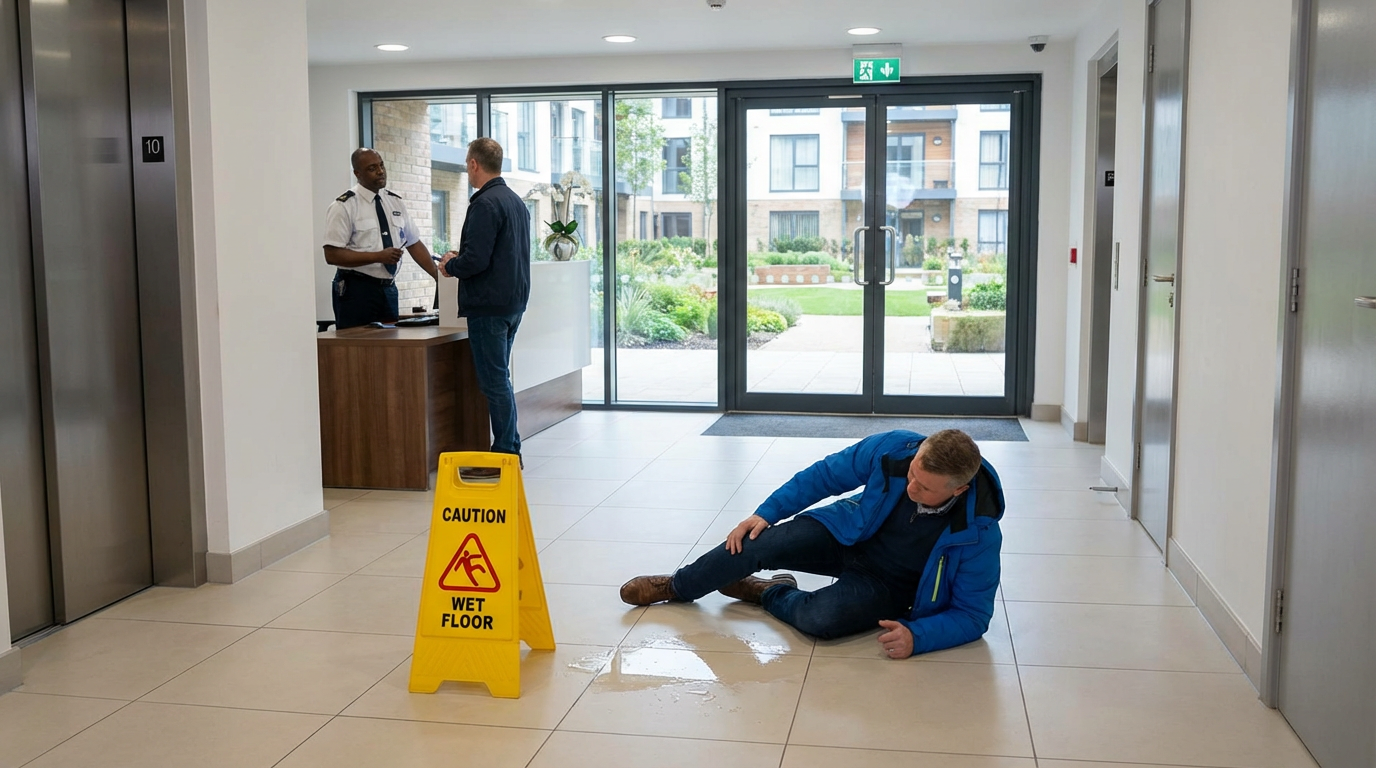
You can slip and fall in the blink of an eye. And then the finger-pointing starts. Was it the landlord’s job to fix it? Or was it the tenant’s job to watch out? There’s no single answer for every case. The location of the fall matters, and the common areas matter most because you share them with everyone.
What Counts as a Slip-and-Fall Claim?
When you tumble down in a rental property, it always falls under “premises liability” law. This term means that someone was injured because a property wasn’t kept safe. But just because you fell does not automatically mean you have a case. You need to show that someone was careless. Not only was the floor slippery, but someone should have fixed it and did not.
The Basic Legal Building Blocks
To win a slip-and-fall case against your landlord, you need four key pieces:
First, your landlord must have a duty to keep that area safe. They are suitable for hallways and stairs, but may not be suitable for the interior of your apartment.
Second, they failed at this job. They may have ignored a leaking roof or a broken step.
Third, their irresponsibility directly caused your fall. If you tripped over your own shoelaces, that’s different than falling on a step the landlord knew was broken for months.
And lastly, you got hurt and have the medical bills to prove it.
Where Landlords Are Usually Responsible
The landlords are solely responsible for maintaining common areas in apartment buildings. This may include lobbies, staircases, hallways, and laundry rooms. Outside areas normally count too. This may include sidewalks, parking lots, and pool areas.
This matters because the landlord controls these places and not you. It’s not your job to tighten a loose handrail in the main stairwell. You also can’t swap out the parking lot lights. That’s the sole responsibility of the landlord.
When Tenants Bear Responsibility
Inside your apartment, you’re usually responsible for your own messes. Spilled juice? That’s on you. For example, juice may be spilled, and toys may be left; these are your problems to address.
But there’s a major exception. When a building issue creates a risk, it could be the landlord’s responsibility. For example, you might have a ceiling leak, which could cause water to drip onto the floor. This is a big hazard. The floor can quickly become a slip hazard. And in the process, if you get hurt, the landlord should be the one to take the blame.
What to Document After a Fall
If you take a tumble, act fast. Take photos or videos immediately, including the hazard. Show the area around it too. Then report the incident in writing to your landlord or property manager. Also, get the names of anyone who saw what happened. You must keep track of all your medical records and missed work days. This can be boring paperwork, but it can save you later.
When You Might Have a Strong Case
Your case can look stronger when the hazard was in a common area. It also helps if people complain before you fall. Timing matters too. If the problem remains there long enough to be remedied, it may indicate neglect. Remember, each case is different. The facts in your case matter more than broad rules.