
After your car accident, you receive a call from an insurance adjuster requesting a recorded statement. It shouldn’t sound like a big deal, maybe, like a formality, but it can be very damaging to your case.
Adjusters are really trained. They are skilled and trained to get information from you. It takes one little thing, and it changes everything for you and against you. Therefore, it is important to know what to say and what is best to keep to yourself.
Why Adjusters Want That Statement
Insurance companies are for-profit businesses. Their goal is to pay out as little as they can. A recorded statement is one of their favorite tools to do that.
They want to lock in your story early. If you remember new details two weeks later, they’ll call it an inconsistency. They slip in sneaky leading questions to get you to take some blame. Then they stack your words against police reports and medical files. Any gap they spot, they use it against you.
What You Should Not Say
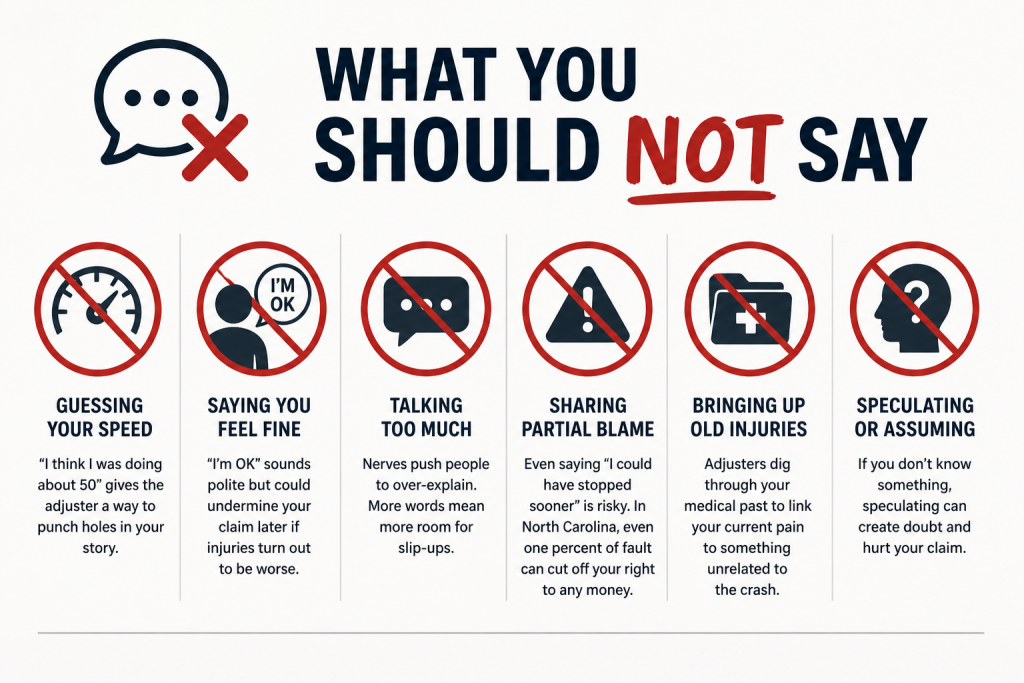
Some mistakes are very easy to make. Here are the big ones to avoid:
- Guessing your speed. Saying “I think I was doing about 50” gives the adjuster a way to punch holes in your story.
- Saying you feel fine. “I’m OK” sounds polite but could undermine your claim later if injuries turn out to be worse.
- Talking too much. Nerves push people to over-explain. More words mean more room for slip-ups.
- Sharing partial blame. Even saying “I could have stopped sooner” is risky. In North Carolina, even one percent of fault can cut off your right to any money.
- Bringing up old injuries. Adjusters dig through your medical past to link your current pain to something unrelated to the crash.
Questions Adjusters Love to Ask
These questions are not there to help you. Each one protects the company’s bottom line. Watch out for things like:
- “Can you walk me through what happened?”
- “How fast were you going?”
- “Did you see the other car before it hit?”
- “Were you on your phone?”
- “Have you had pain in that spot before?”
- “Do you expect to recover soon?”
Some sounds are totally harmless on the surface. They’re not. Every one of them aims to pull something useful out of you.
How to Protect Yourself
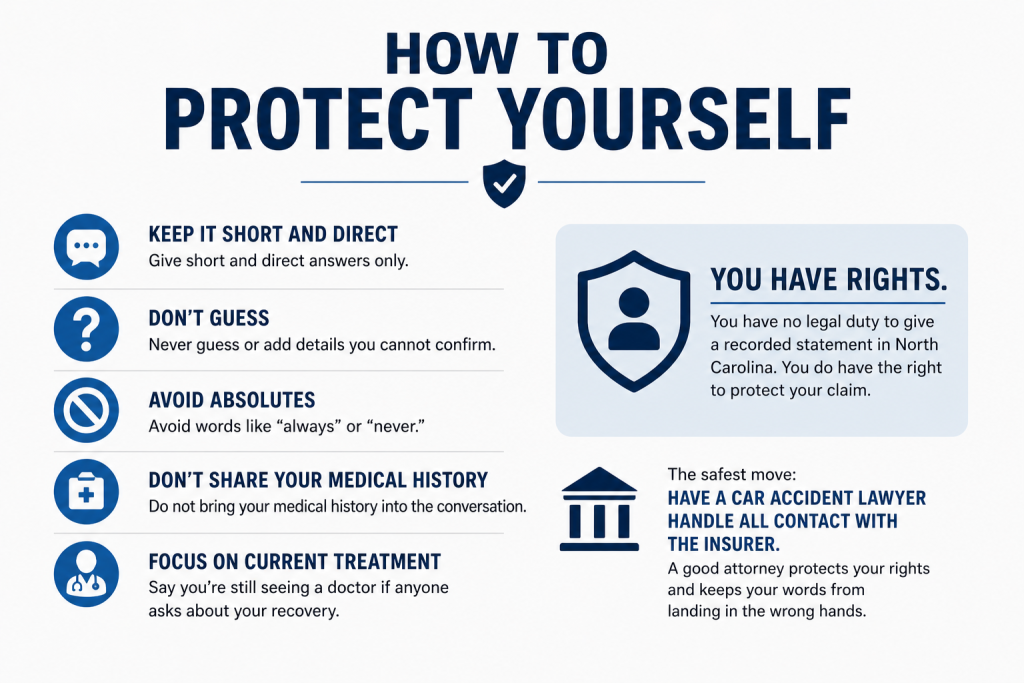
Here’s something most people miss: you have no legal duty to give a recorded statement in North Carolina. Adjusters may act like you have no choice. You do.
If you give a statement, keep it short. Stay with the basic facts. Do not guess. Do not add details you are unsure about. If you do not know something, say that and stop there.
A few simple rules to keep in mind:
- Give short and direct answers only
- Never guess or add details you cannot confirm
- Avoid words like “always” or “never.”
- Do not bring your medical history into the conversation
- Say you’re still seeing a doctor if anyone asks about your recovery
The safest move is to have a car accident lawyer handle all contact with the insurer. A good attorney steps in, handles those calls, and keeps your words from landing in the wrong hands.
Other Tricks to Watch Out For
Recorded statements are just one move in the adjuster’s playbook. They also push quick, low settlement offers before you know the real cost of your injuries. They ask for wide access to your medical records to dig for old conditions. They drag out your claim so bills pile up and pressure builds. They push to place some blame on you.
All roads lead to the same place: a smaller payout.
Get Help Early
In cases of serious injuries, if the other side disputes fault or the adjuster is relentless, it is best to consult a lawyer early on. You no longer have to rely on assumptions. You stop being the target. You need to make sure that your claim stays on solid ground.
A recorded statement can potentially ruin your case. And so protect yourself by fully knowing your rights. Also, try to be cautious with your wording. Get a great lawyer to support you as soon as possible.